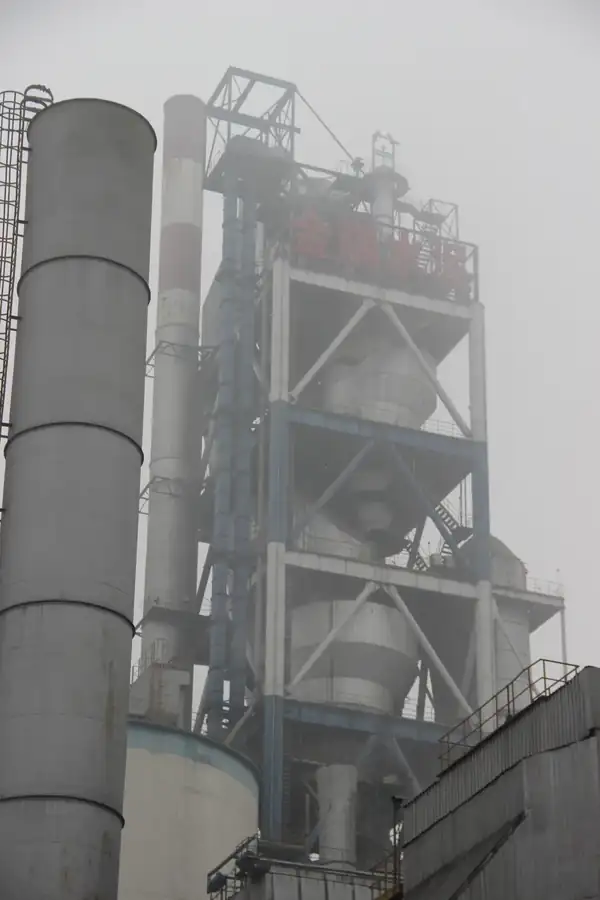
Environmental exposure
Continuous heat, thermal cycling and external heat loss around a rotating kiln shell.
Operating conditions
The review focuses on the actual exposure of Rotary kiln shell: duty cycle, temperature changes, moisture or process media, dust or particle movement, vibration, access and shutdown constraints. Where a verified numerical value is unavailable, the condition is kept qualitative.
Observed condition and failure signs
Heat loss and high external surface temperature required a maintainable thermal-control approach.
Problem analysis
Heat loss and high external surface temperature required a maintainable thermal-control approach. Inspection should distinguish active defects from stable areas, confirm substrate soundness and cleanliness, and identify edges, welds, joints, low points and restricted-access zones before the repair scope is fixed.
Problem to address
Heat moves through the equipment wall and then leaves by convection and radiation. Discontinuities, supports, joints and damaged insulation create local heat bridges, so the complete geometry must be reviewed rather than one temperature point.
Protection objectives
Create a maintainable protection path for Rotary kiln shell, reduce the identified exposure at vulnerable details and keep future inspection practical without claiming an unverified service result.