Purpose and limits of the checklist
Use the checklist to preserve as-found evidence during the limited access period created by shutdown. The output is a traceable field record that another reviewer can follow after the furnace has been cleaned, opened further or repaired.
The field team records what is present, where it is present and when it was observed. Root-cause diagnosis, structural acceptance, pressure-boundary assessment, repair design, coating selection and return-to-service decisions remain with the responsible technical disciplines and authorized site procedures.
Define the furnace zones before inspection begins
Divide the furnace into repeatable zones using fixed equipment landmarks, process direction and component identifiers. Record entry, heating, transition and exit areas separately where their geometry, heating arrangement or access differs.
Issue the same zone names to operations, inspection and maintenance personnel before the walkdown. A stable naming system prevents photographs, samples and repair notes from becoming detached from their original location.
- Mark the direction of material travel and the inspection route.
- Identify doors, seals, burners, radiant tubes, supports and major lining transitions.
- Record inaccessible, obscured or unsafe locations as limitations rather than omitting them.
- Keep the original zone ID if the area is later cleaned, opened or repaired.
Inspect and photograph before cleaning
Complete the as-found survey before sweeping, washing, scraping, blasting, dismantling or local repair. Deposits, loose fragments, colour boundaries, flow marks and the edges of earlier repairs can change or disappear as soon as maintenance starts.
Begin with overview photographs that show the equipment context, then add mid-range views that connect the condition to a component, followed by detail images with a visible location reference. Record whether every image is pre-cleaning, post-cleaning or post-opening.
Record lining and joint condition
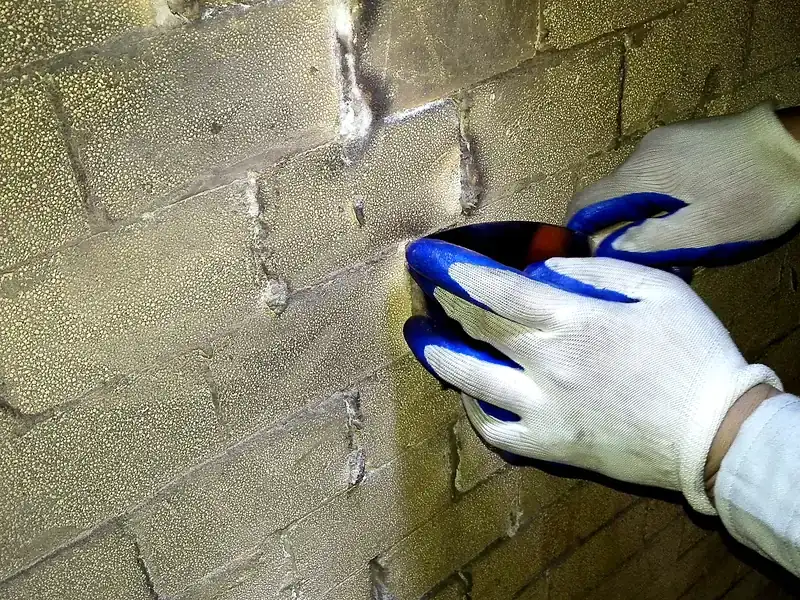
Walk the lining by zone and record visible cracks, open joints, displaced pieces, surface loss, loose material, staining, deposits and previous repair boundaries. Describe the visible form and extent without assigning a mechanism from appearance alone.
At joints and transitions, note whether the detail appears intended to accommodate movement, access or a change in construction. Do not treat closure of a joint as a routine field correction until its function has been confirmed.
- Locate each observation against a zone, elevation or fixed landmark.
- Photograph the relationship between the defect, nearby joint and adjacent sound-looking area.
- Retain loose fragments only under the site's authorized evidence and handling process.
- Refer crack interpretation to the separate classification workflow.
Record radiant tubes, burners and supports
For visible radiant tubes, burners, mountings and supports, record surface condition, connections, clearances, nearby deposits, contact marks and changes in the surrounding lining. Capture repeated patterns across equivalent components instead of photographing only the most obvious location.
If a condition may involve structural support, combustion equipment, leakage or a pressure boundary, preserve the observation and escalate it. The checklist does not authorize a fitness-for-service conclusion.
Map deposits, flow marks and previous repairs
Record deposit shape, direction, boundary and relationship to openings, burners, seals, joints and changes in geometry before removal. Note whether the deposit is loose, adherent, layered or associated with a visible change beneath it, without naming its composition unless verified information is available.
Identify previous repairs by their visible boundary and link them to available maintenance records. Record changes at repair edges and interfaces as separate observations so later reviewers can distinguish original construction, earlier intervention and current condition.
Use traceable photographs and observation IDs
Assign every observation a stable ID that appears in the field log, photograph register and any later repair or sample record. Each image set should establish location before showing detail, so a reviewer who was not present can return to the same place.
- Record date, inspection stage, furnace zone and component ID.
- State camera direction and include a safe scale or fixed reference where practical.
- Keep original files and avoid edits that remove context from the evidence copy.
- Link post-cleaning photographs to the matching as-found observation.
- Record the name or role responsible for the observation and any stated limitation.
Separate observation from diagnosis
Write observations in neutral field language: what is visible, where it is located and how it relates to nearby components. Put possible causes in a separate question or hypothesis field so they cannot be mistaken for confirmed findings.
A directional stain, open joint, cracked lining or deposit pattern can guide the next investigation, but none of these observations alone proves a failure mechanism. Later diagnosis must reconcile operating history, equipment arrangement, material information and competing explanations.
Record unresolved items and escalation needs
Create an open-item register during the walkdown rather than relying on memory at the end of the outage. State the missing record, inaccessible location, uncertain component identity or discipline decision required, and assign an owner under the site's normal process.
Escalate before evidence is altered
- Unexpected substrate exposure, extensive material loss or loose components require the responsible site discipline.
- Suspected leakage, burner abnormality, pressure-boundary concern or structural movement requires specialist review.
- A sample should not be removed until its question, location and handling route are defined.
Record inspection limitations
- Identify areas hidden by deposits, components, access restrictions or incomplete opening.
- State where lighting, viewing angle or safety limits reduced confidence in an observation.
- Do not mark an unseen location as satisfactory.
Build the shutdown evidence package
Assemble the zone map, operating and shutdown context supplied by the site, as-found photograph register, component observations, deposit and repair map, post-cleaning comparisons, open items and escalation records. Preserve superseded field notes where the audit trail requires them.
The package is complete when another reviewer can locate each condition, understand when evidence changed and identify which questions remain unresolved. Completion of the package does not mean the furnace or a proposed repair has been accepted.
Hand evidence to engineering investigation
Provide the evidence package to the responsible engineering, operations and maintenance reviewers before repair scope is finalized. Highlight the original observation boundary, any evidence removed during cleaning, inaccessible zones and questions that could change the work scope.
Where crack classification, repair planning or cure verification is required, open the relevant downstream workflow with the same zone and observation IDs. This preserves the distinction between collecting evidence and interpreting or acting on it.
Scope limits
This checklist does not determine root cause, certify lining or structural condition, approve a repair, select a DAYU-X product, prescribe application values or authorize return to service. Project decisions require verified operating information, authorized procedures and review by the responsible disciplines.
Related technical pathways
Project takeaway
Need technical documents or project guidance?
Send the operating condition and the document or application question you need reviewed.