
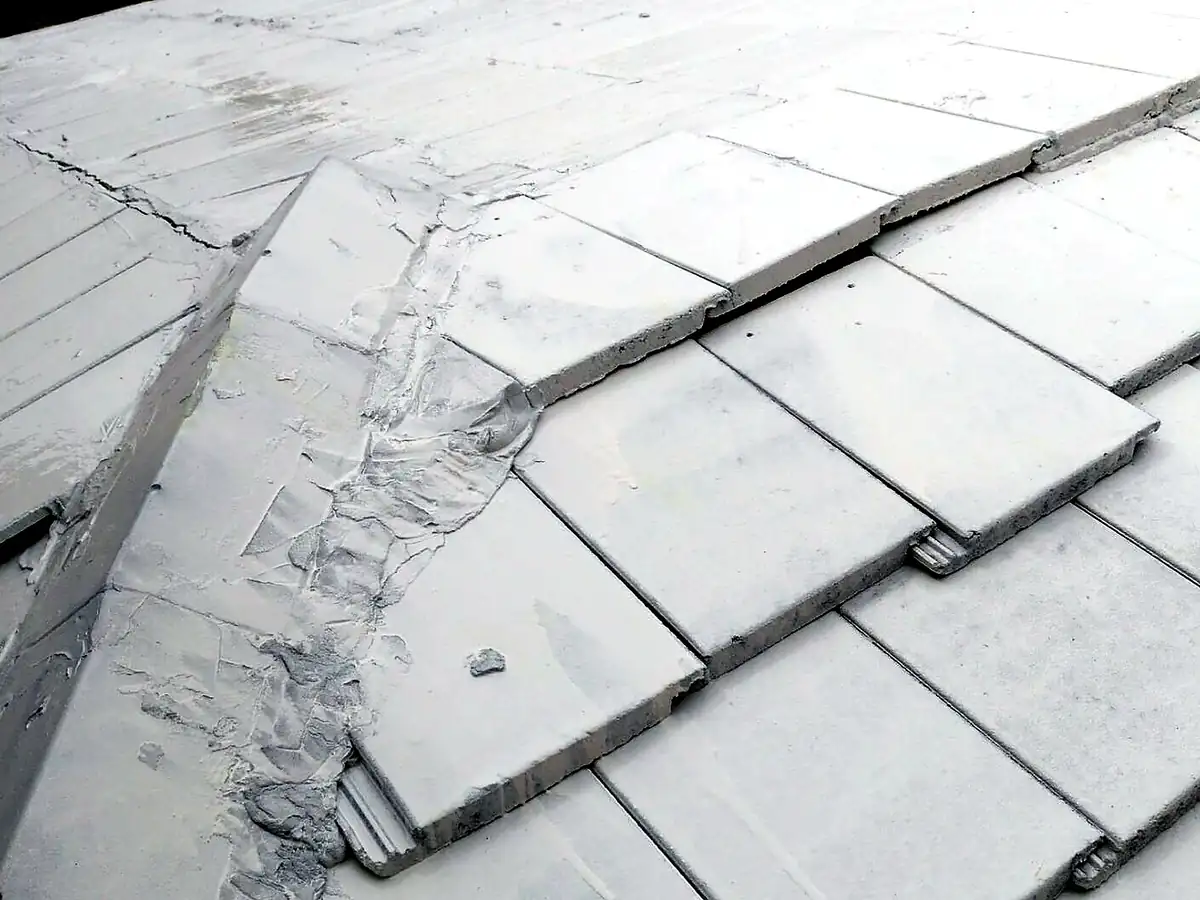
Why Concrete Roof Coatings Crack or Peel

Technical Articles

Why Concrete Roof Coatings Crack, Peel, or Lose Adhesion

Visible failure on a concrete roof is an outcome, not a diagnosis. Cracking, peeling and adhesion loss can begin in the substrate, an old repair, trapped moisture, a moving joint or a weak retained layer. This article provides a troubleshooting route for identifying the failure boundary before any repair or replacement system is discussed.

Classify the visible failure before assigning a cause

Map whether the coating is cracked, blistered, peeling at edges, separating between layers or releasing with concrete or old repair material attached. Record the size, shape and distribution of each condition rather than combining them under one failure label.

  • Photograph overview and close-detail views with traceable locations.
  • Distinguish isolated damage from repeated patterns.
  • Note whether failure follows joints, cracks, drains, repairs or ponding areas.
  • Preserve representative evidence before cleaning changes the surface.

Trace moisture through the roof assembly

Moisture may arrive from rainfall, failed drainage, leaking penetrations, the substrate or the occupied space below. Follow water staining, damp boundaries and drying differences instead of assuming the nearest visible defect is the source.

A surface that appears dry during one visit may still have a recurring moisture path. Review recent weather, occupancy and repair history, and identify where further moisture assessment is needed.

Separate active cracks and joints from stable surface defects

Record crack direction, continuity, relation to structural or construction joints, and evidence of recurring movement. A coating cannot stabilize structural movement, restore unsound concrete or replace the correct treatment of an active joint.

Repeated cracking through a previous patch suggests that the underlying movement or repair interface remains relevant. Extend the inspection beyond the visible line before defining a local repair boundary.

Upstands, outlets, fasteners, equipment bases and penetrations concentrate transitions and water paths. Inspect continuity and movement at these details separately from the open field of the roof.

Check the strength of retained layers and earlier repairs

Determine whether the separation occurs within the finish, between coating layers, at the coating-to-substrate interface or inside a weak concrete or repair layer. A new coating applied over an unstable layer inherits that layer's failure boundary.

Build a failure hypothesis from location and evidence

Compare defect maps with moisture paths, roof geometry, drainage, movement details, surface condition and maintenance history. Where more than one mechanism is plausible, state the alternatives and the inspection or trial needed to distinguish them.

Decide whether the roof is ready for a repair trial

Proceed to a controlled repair or compatibility trial only after unsound material, active water entry and movement details have been addressed within the project scope. Define what the trial will evaluate and avoid treating a short observation as proof of long-term performance.

What this diagnosis cannot establish

Failure diagnosis does not select a DAYU-X product, quantify future service life or prove a thermal benefit. The confirmed substrate, moisture condition, movement, intended function and project documents must govern any later system review.

Related technical pathways

Project takeaway

Need technical documents or project guidance?

Send the operating condition and the document or application question you need reviewed.

Request technical support