
Storage Tank and Pipeline Maintenance Inspection

Application Guides

Storage Tank and Pipeline Maintenance Inspection

Maintenance inspection should describe the current condition of a tank and its connected piping before a repair or replacement system is chosen. This guide focuses on where to look, what to record, how to distinguish defect patterns and when the finding should be escalated beyond coating maintenance.

Establish the inspection boundary and baseline

Define the tank, connected line sections, supports, insulation interfaces and excluded areas. Record operating and shutdown state, recent cleaning, visible leakage, prior repair locations and access limitations so later inspections can return to the same boundary.

  • Use a consistent zone and photograph reference.
  • Separate as-found, cleaned and prepared conditions.
  • Record inaccessible areas rather than assuming their condition.
  • Identify observations requiring another engineering discipline.

Inspect tank roof, shell and bottom-ring details

Look beyond broad visible panels. Check roof seams and penetrations, nozzles, welded attachments, ladders, handrails, shell transitions, bottom rings, foundation interfaces and drainage paths for patterns of moisture retention or mechanical damage.

Inspect connected piping, supports, welds and low points

Trace the connected pipework through supports, shoes, guides, branches, flanges, drains and insulation terminations. Record whether defects align with water traps, movement, vibration, coating discontinuities or previous local work.

Distinguish cosmetic change from active failure

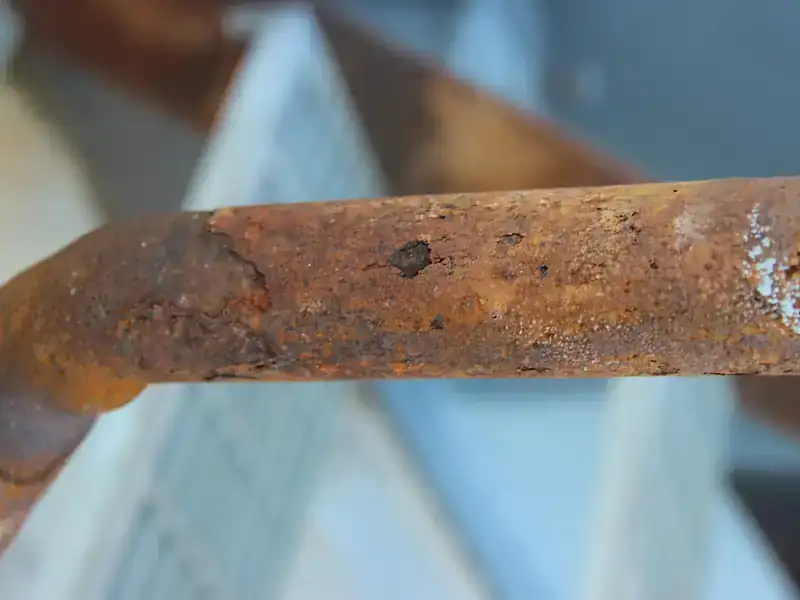
Compare appearance, adhesion condition, exposed substrate and defect progression. Cleaning can reveal or remove evidence, so capture the original pattern before deciding whether a stain, chalked finish or local damage represents active underfilm deterioration.

Map the boundary and check nearby edges, welds and retained coating. Do not infer the cause from one photograph; review moisture, contamination, previous repair and exposure history.

Identify where geometry retains liquid or where access, clamps, insulation or maintenance activity repeatedly damages the protective layer.

Prioritize repair by consequence and progression

Rank active leakage, structural concerns, safety-related defects, rapidly expanding damage and loss at critical details ahead of stable cosmetic change. The inspection record should explain the basis for priority without inventing a remaining-life value.

Define the repair scope and follow-up record

Route confirmed coating defects into a separate repair plan that sets retained, removed and repaired zones. Establish baseline images and location references for follow-up, and record any operating or drainage correction needed before recoating.

Escalate conditions outside coating maintenance

Active process leakage, uncertain structural loss, cracking, movement, inaccessible corrosion or unknown hazardous contamination require the appropriate engineering and safety review. Inspection findings alone do not select a product or establish service life.

Related technical pathways

Project takeaway

Need technical documents or project guidance?

Send the operating condition and the document or application question you need reviewed.

Request technical support